Walk into any pet store or scroll through any online marketplace, and you will see two fundamentally different approaches to dog beds: elevated beds (also called raised beds, pet cots, or hammock-style beds) that lift your dog off the ground on a frame, and floor beds (cushioned beds, bolster beds, donut beds, mattress-style beds) that sit directly on the surface. Both types sell in massive volume — the global pet bed market exceeded $2.8 billion in 2025 — but they solve different problems for different dogs.
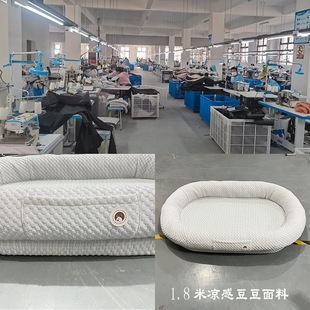
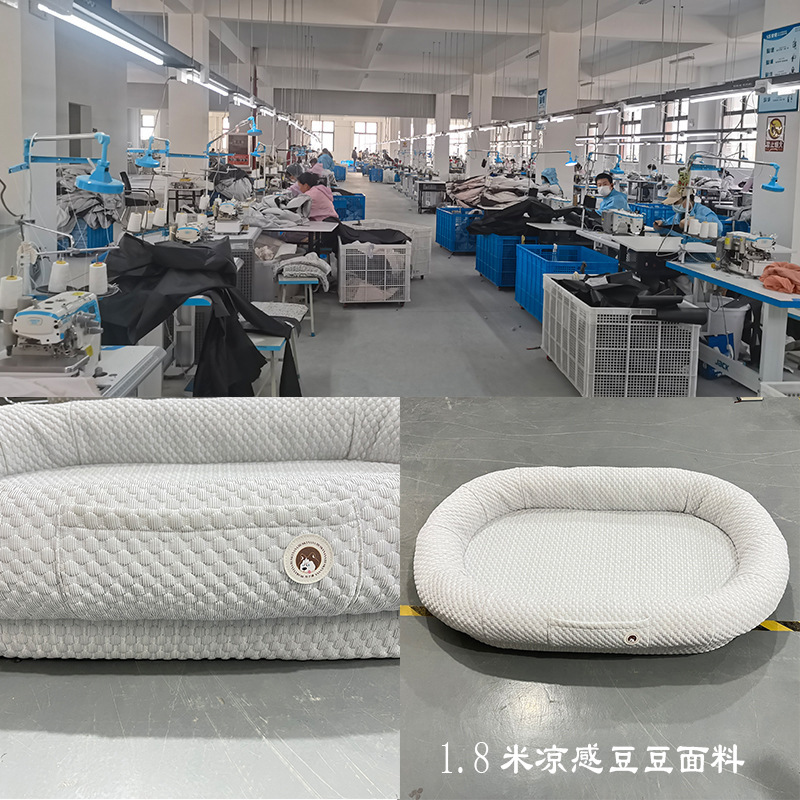
At Feitu Pet, we manufacture both elevated and floor dog beds across our 6,000 sqm factory in Xuzhou, Jiangsu. We produce over 50 SKUs in both categories, so we have no bias toward either type. This guide breaks down the real differences — backed by material specs, durability data, and manufacturing insights — so you can choose the right bed for your dog, or stock the right mix if you are a retailer.
Elevated Dog Bed vs Floor Dog Bed: Quick Comparison Table
Before diving into the details, here is a side-by-side comparison across the factors that matter most:
| Feature | Elevated Dog Bed (Cot Style) | Floor Dog Bed (Cushion/Bolster) |
|---|---|---|
| Airflow & Cooling | Excellent — 5-10 cm air gap underneath provides convective cooling; surface runs 3-5 degrees C cooler | Limited — heat trapped between dog and floor; some cooling gel models available |
| Joint Support | Good — even weight distribution on taut surface; reduces pressure points | Excellent (memory foam) — 40D-50D foam contours to body shape and cushions joints directly |
| Durability | 4-6 years (steel frame); mesh replaceable at 30-40% of full bed cost | 1-3 years (PP cotton); 3-5 years (memory foam); fill compresses over time |
| Portability | Good — most fold flat or disassemble; aluminum models weigh 1.5-2.5 kg | Varies — small beds portable; large memory foam beds heavy (3-8 kg) |
| Washability | Excellent — mesh wipes clean or hose off; dries in minutes | Good — removable covers machine washable; fill cannot be washed (foam/crushed foam) |
| Climate Suitability | Best for warm/hot climates; also insulates from cold floors | Best for cool/cold climates; traps body heat for warmth |
| Best Breeds | Large breeds, overheating-prone breeds (Bulldogs, Huskies), outdoor dogs | Small breeds, nesting breeds, anxious dogs, senior dogs with severe arthritis |
| Indoor/Outdoor | Both — Textilene mesh excels outdoors (UV/mold resistant) | Primarily indoor — most fabrics degrade outdoors |
| Price Range (FOB) | $6-$18 depending on frame material and size | $3-$28 depending on fill type (PP cotton to memory foam) |
| Weight Capacity | 30-75 kg depending on frame (steel vs aluminum) | No structural limit — support depends on fill density and thickness |
What Is an Elevated Dog Bed?
An elevated dog bed — sometimes called a cot style dog bed, raised pet cot, or dog hammock — consists of a rigid frame (steel or aluminum) with a fabric sleeping surface stretched taut across it. The dog sleeps 10-25 cm above the ground, suspended on the fabric.
Frame Materials: Steel vs Aluminum
The frame is the structural backbone of every elevated bed. The two standard materials are:
- Powder-coated steel — The workhorse option. 16-gauge steel tube with zinc primer undercoat and polyester powder topcoat resists rust and scratching. Weight capacity: 50-75 kg. Heavier (2.5-4 kg for a large bed), but significantly more durable under large-breed use. Cost advantage: 20-30% cheaper than aluminum at equivalent sizes.
- Anodized aluminum — The premium and travel option. Lighter (1.5-2.5 kg for a large bed), corrosion-proof without coating, and easy to disassemble. Weight capacity: 30-50 kg. Best for camping, travel, and small-to-medium breeds. Higher cost but appreciated by retailers targeting the outdoor/adventure pet market.
Mesh and Fabric Options
The sleeping surface determines comfort, breathability, and longevity:
- Textilene mesh (1x1 weave) — PVC-coated polyester that is virtually indestructible in outdoor conditions. UV-resistant, mold-proof, dries in under 10 minutes. Slightly firm feel. Supports up to 50 kg on a medium frame. This is the go-to material for outdoor and wholesale elevated beds.
- 600D Oxford fabric — Tighter weave with moderate breathability. More cushioned feel than mesh. Water-resistant but not waterproof — not ideal for permanent outdoor placement. Often paired with a removable cushion pad for extra comfort.
- 1680D ballistic Oxford — Heavy-duty option for chew-resistant models. Twice the abrasion resistance of 600D. Higher cost but valuable for retailers selling to owners of aggressive chewers.
For a deeper breakdown of elevated bed construction and wholesale pricing, see our elevated dog bed sizes and materials guide.
What Is a Floor Dog Bed?
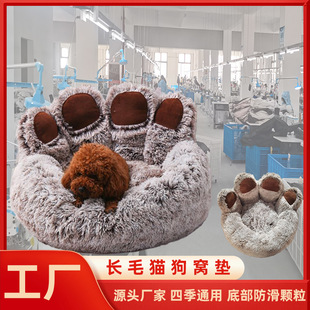
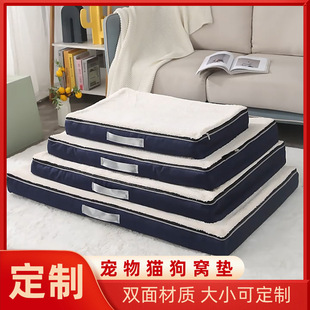
Floor dog beds sit directly on the ground and rely on internal fill materials to provide cushioning and support. This category includes several distinct sub-types:
- Bolster beds — Rectangular beds with raised padded edges that create a nest-like enclosure. Dogs can rest their heads on the bolsters. Popular with medium breeds. See our Bolster Dog Bed.
- Donut/calming beds — Round beds with high, soft walls all around. The enclosed shape triggers a nesting instinct that reduces anxiety. Best sellers for small breeds and anxious dogs. See our Calming Donut Bed.
- Orthopedic mattress beds — Flat rectangle with thick memory foam (30D-50D density) or egg-crate foam. No bolster sides. Medical-grade support for senior dogs and post-surgery recovery. Our orthopedic memory foam guide covers this category in detail.
- Chew-resistant beds — Built with reinforced fabrics (1680D Oxford, ripstop nylon) and hidden zippers to withstand destructive chewing. Essential for puppies and high-energy breeds. See our Chew-Resistant Dog Bed.
Fill Materials in Floor Beds
The fill inside a floor bed determines its comfort, support level, lifespan, and price point. Here is what we use across our product line:
- PP cotton (polyester fiber) — Lightweight, machine washable, hypoallergenic. FOB $3-$8. Lasts 1-2 years before flattening. Our standard medium bed uses 400g of fill; large beds use 650g. Covers 60% of the global pet bed market by volume.
- Memory foam (viscoelastic PU) — Premium orthopedic option. Density rating matters: 30D for small dogs, 40D standard orthopedic, 50D medical grade for dogs over 30 kg. FOB $12-$28. Lasts 3-5 years. Does not compress permanently like fiber fill.
- Crushed foam (shredded PU) — Mid-range option between PP cotton and solid memory foam. Moldable, decent airflow between pieces, refillable. FOB $6-$14. Lasts 2-3 years.
For a complete comparison of all fill materials including recycled PET and egg-crate foam, read our pet bed materials guide for retailers.
When to Choose an Elevated Dog Bed
Elevated beds are the better choice in these specific scenarios:
1. Hot Climates and Summer Months
If you live in a region where temperatures regularly exceed 25 degrees Celsius, an elevated bed keeps your dog significantly cooler. The 5-10 cm air gap allows convective airflow on all sides of the dog — top, bottom, and sides. Our factory tests show that the surface temperature of a Textilene mesh elevated bed measures 3-5 degrees Celsius lower than a PP cotton floor bed placed in the same room at the same ambient temperature.
Brachycephalic breeds that overheat easily — Bulldogs, Pugs, French Bulldogs, Boston Terriers — benefit enormously. Dense-coated breeds like Huskies, Malamutes, and Samoyeds also prefer the airflow during warm months.
2. Dogs with Hip Dysplasia or Mild Joint Issues
The taut surface of an elevated bed distributes a dog's weight evenly without creating the "hammock effect" where soft beds cause the spine to curve. For dogs with mild to moderate hip dysplasia, the flat surface maintains better spinal alignment. The raised height also reduces the distance a dog must crouch to lie down — approximately 15-20 cm less bending at the hips compared to a floor bed.
3. Outdoor and Camping Use
Elevated beds are unmatched for outdoor environments. A Textilene mesh bed placed on grass, gravel, dirt, or a patio deck resists moisture, mud, insects, and UV damage. It dries in minutes after rain. Floor beds placed outdoors absorb ground moisture, develop mildew, and attract insects inside the fill material. If your dog spends significant time outdoors or you camp with your dog, an elevated bed is the clear winner.
4. Multi-Dog Households
Elevated beds are easier to sanitize between dogs. The mesh surface can be wiped down with a mild disinfectant solution and dries instantly — important for preventing the spread of skin infections, fleas, and other parasites between dogs. Floor beds with foam or fiber fill cannot be fully sanitized without removing and washing the cover, and the fill itself may harbor bacteria.
5. Dogs That Dig or Scratch at Their Beds
Some dogs circle and scratch before lying down. On a floor bed, this behavior shreds fabric and pulls out fill material within weeks. Elevated beds with Textilene mesh resist scratching far better — the PVC coating and tight weave withstand repeated claw contact. 1680D Oxford fabric versions offer even greater scratch resistance.
When to Choose a Floor Dog Bed
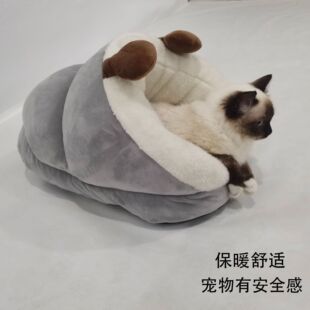
Floor beds are the better choice in these scenarios:
1. Senior Dogs with Severe Arthritis or Post-Surgery Recovery
While elevated beds provide good support for mild joint issues, dogs with severe arthritis, recovering from orthopedic surgery, or with chronic pain conditions often need the direct cushioning that only thick memory foam provides. A 50D density memory foam bed (7-10 cm thick) contours to the dog's body shape and eliminates pressure points at the hips, elbows, and shoulders. Some veterinary orthopedic specialists recommend a hybrid approach: a memory foam pad placed on top of an elevated frame combines the benefits of both.
2. Anxious Dogs and Nesting Breeds
Dogs with separation anxiety, noise phobia, or general nervousness strongly prefer enclosed floor beds. Calming donut beds and bolster beds with raised walls create a den-like environment that triggers the parasympathetic nervous system — literally calming the dog down. Small nesting breeds (Dachshunds, Chihuahuas, Cavalier King Charles Spaniels) instinctively seek enclosed spaces. An open elevated platform offers none of this psychological comfort.
3. Cold Climates and Winter Months
In cold weather, floor beds with thick fill trap body heat around the dog, creating a warm microclimate. The bolster walls of a bolster bed add another insulation layer. While elevated beds do insulate from cold floors (the air gap prevents conductive heat loss), they also allow cold air to circulate under the dog, which can be uncomfortable in unheated rooms below 15 degrees Celsius.
4. Small Dogs Under 5 kg
Very small dogs (Chihuahuas, Yorkies, Toy Poodles, Maltese) often dislike elevated beds because the firm mesh surface offers minimal cushioning for their small bodies, and the height can feel unstable for dogs that weigh under 5 kg. A soft, cushioned floor bed sized to their body feels more secure and comfortable.
The Hybrid Approach: Combining Both Bed Types
Increasingly, dog owners and retailers are recognizing that the best solution is not either/or — it is both. A growing trend we see in our wholesale orders is customers buying elevated and floor beds as complementary products:
- Summer/Winter rotation — Elevated bed for warm months, memory foam floor bed for cold months
- Indoor/Outdoor pairing — Floor bed in the bedroom, elevated bed on the patio or in the yard
- Day/Night split — Elevated bed for daytime lounging (cooler, easy to clean), cushioned floor bed for overnight sleeping (warmer, softer)
- Multi-room placement — Different bed types in different rooms based on the environment (tile floor rooms get elevated beds; carpeted rooms get floor beds)
For retailers, bundling an elevated bed with a complementary floor bed at a 10-15% bundle discount drives higher average order values and reduces the "which one?" decision paralysis that causes cart abandonment.
Material Durability: Real-World Testing Data
We test every bed design in our factory before production. Here is how the two categories compare in standardized durability tests:
| Test | Elevated Bed (Steel + Textilene) | Floor Bed (PP Cotton) | Floor Bed (Memory Foam) |
|---|---|---|---|
| Weight test (static load) | 75 kg sustained, 150 kg burst | N/A (no frame) | N/A (no frame) |
| UV exposure (500 hrs) | Less than 5% tensile loss | 15-20% fabric degradation | 10-15% cover degradation |
| Abrasion (Martindale, cycles) | Textilene: 40,000+ | 600D Oxford: 15,000-20,000 | Velvet cover: 8,000-12,000 |
| Water dry time | Under 10 minutes | 6-12 hours (full bed) | Cover: 4-6 hrs; foam: 24-48 hrs |
| Fill compression (1 year use) | Less than 3% mesh sag | 30-50% loft loss | 5-10% compression |
| Expected lifespan | 4-6 years (frame); 2-3 years (mesh) | 1-2 years | 3-5 years |
These numbers come from our in-house testing lab. The key takeaway: elevated beds win on raw durability because the structural support comes from a rigid metal frame, not a compressible fill. However, premium memory foam beds (40D+) hold up surprisingly well — if the foam density is high enough, compression is minimal over years of use.
Breed-Specific Recommendations
Based on our manufacturing experience and feedback from retail partners who have sold hundreds of thousands of beds across both categories, here are our breed-specific recommendations:
| Breed Group | Recommended Type | Why |
|---|---|---|
| Large working breeds (Lab, Golden, GSD) | Elevated (steel frame) | Weight support, cooling, easy to clean after outdoor activity |
| Giant breeds (Great Dane, Mastiff, St. Bernard) | Elevated (reinforced steel) | Only option with sufficient weight capacity (75 kg+); foam beds compress under their weight |
| Brachycephalic breeds (Bulldog, Pug, Frenchie) | Elevated (mesh) | Overheating prevention is critical; airflow reduces respiratory distress |
| Sighthounds (Greyhound, Whippet) | Elevated + thin pad | Thin coat means they feel cold floors; bony joints need some cushioning but also cooling |
| Small nesting breeds (Chihuahua, Dachshund, Bichon) | Floor (donut/bolster) | Nesting instinct; need warmth and enclosed security; too light for elevated bed stability |
| Anxious breeds (Cavalier, Havanese, Cockapoo) | Floor (calming donut) | Enclosed shape reduces anxiety; bolster walls provide head rest and security |
| Senior dogs (any breed, 8+ years) | Floor (memory foam 40D+) | Maximum joint cushioning; contours to arthritic hips and shoulders |
| Active outdoor dogs (any breed) | Elevated (Textilene) | Mud-proof, quick-dry, pest-resistant; pairs with camping and outdoor lifestyle |
For a complete breed-specific dog bed size chart, see our dedicated sizing guide.
Cost Comparison for Retailers and Distributors
If you are sourcing dog beds for retail or distribution, here is how the two categories compare on a cost basis:
- Elevated beds (FOB) — Small: $6-$8, Medium: $8-$12, Large: $12-$18. Aluminum frame adds $2-$4 per unit. Textilene mesh is $1-$2 less than 600D Oxford per unit.
- Floor beds — PP cotton (FOB) — Small: $3-$5, Medium: $5-$8, Large: $7-$12. Lowest cost category but shortest lifespan.
- Floor beds — Memory foam (FOB) — Small: $8-$12, Medium: $12-$18, Large: $18-$28. Highest cost but strongest perceived value and longest cushioned lifespan.
Elevated beds typically carry higher retail margins (50-65%) than PP cotton floor beds (40-55%) because consumers perceive the metal frame as more premium and durable. Memory foam beds match elevated beds on margin potential due to their "orthopedic" positioning. For wholesale sourcing details, explore our wholesale dog beds sourcing guide.
Making the Right Choice: Decision Framework
Use this simple decision framework to pick the right bed type:
- Climate first — Hot climate or summer use? Start with elevated. Cold climate or winter use? Start with floor bed.
- Health condition — Mild joint issues or cooling needs? Elevated. Severe arthritis or post-surgery? Memory foam floor bed.
- Dog personality — Independent, confident dogs adapt well to elevated beds. Anxious, nesting dogs need enclosed floor beds.
- Environment — Outdoor placement? Elevated, no question. Indoor only? Either works; choose based on the factors above.
- Budget — Lowest cost entry? PP cotton floor bed. Best long-term value? Steel-frame elevated bed (longest total lifespan). Best premium positioning? Memory foam floor bed.
And remember: the best answer for many dogs is one of each. A $12 elevated bed for the patio and a $15 bolster bed for the bedroom gives your dog the best of both worlds for under $30 combined FOB cost.
Get the Right Bed for Your Dog — or Your Product Line
Whether you are a dog owner choosing between an elevated bed and a floor bed, or a retailer building out your pet bed assortment, the right choice depends on your dog's breed, health, environment, and personality. Both categories have clear strengths, and the data shows they serve complementary needs.
At Feitu Pet, we manufacture both elevated and floor beds with full OEM customization — custom fabrics, frame colors, branding, and packaging. MOQ starts at 200 pieces per style for stock designs and 500 pieces for custom orders. Browse our full pet bed collection or contact us for a quote with your requirements.