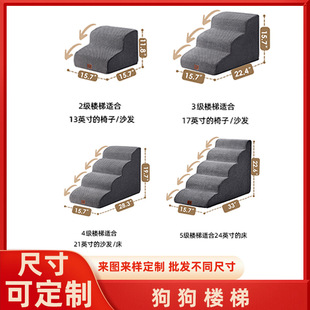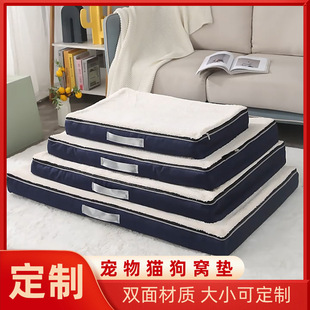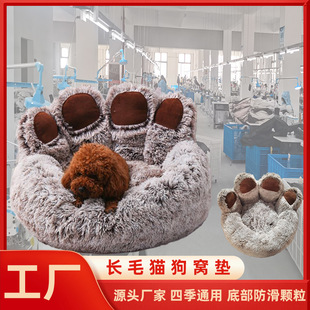
The global pet care market surpassed $246 billion in 2023 and is projected to reach $325 billion by 2028 (Grand View Research). Pet beds, feeding bowls, toys, collars, leashes, and accessories are among the fastest-growing subcategories — and the vast majority of these products are manufactured in China. For Amazon FBA sellers, private label brands, and wholesale distributors, partnering with a China OEM pet product factory offers access to the widest range of materials, the most competitive pricing, and full customization at scale.
At Feitu Pet, we operate a 6,000 sqm manufacturing facility in Xuzhou, Jiangsu, producing pet beds, dog car seats, plush toys, and accessories for brands across North America, Europe, and Australia. This guide covers everything you need to know about sourcing OEM pet products from China in 2026 — from material selection and safety certifications to private label packaging and quality control protocols.
Why Brands and Amazon FBA Sellers Source Pet Products from China OEM Factories
China accounts for an estimated 70–80% of global pet product manufacturing by volume. The reasons are structural, not merely price-based:
- Vertical supply chain integration: Fabric mills, foam producers, injection molding suppliers, hardware manufacturers, and packaging plants are clustered in the same industrial zones, reducing lead times and logistics costs dramatically.
- Material breadth: Chinese OEM factories can work with plastics, silicone, stainless steel, Oxford fabric, TPU, Textilene mesh, memory foam, PP cotton, and dozens of specialty materials — often within one facility.
- Customization depth: Custom colorways, proprietary shapes (new molds), branded packaging, custom hang tags, and retail-ready presentation are standard capabilities, not premium add-ons.
- Amazon FBA readiness: Experienced China factories understand FBA prep requirements — FNSKU labeling, poly bag suffocation warnings, master carton labeling — and build them into the production flow.
- Price competitiveness: FOB prices for quality pet beds start at $4–$8; silicone feeding bowls at $1.50–$3.50; plush toys at $2–$6 — margins that support sustainable retail pricing on Amazon and in wholesale channels.
Material Comparison: Plastic vs Silicone vs Fabric/Plush vs Stainless Steel
Material selection is the single most important decision in OEM pet product development. It determines safety profile, durability, washability, customization options, regulatory compliance burden, and price point. The table below compares the four dominant material categories across the metrics that matter to brands and buyers.
| Material | Material Safety | Durability | Washability | Customization Options | California Prop 65 | Typical MOQ | FOB Price Range |
|---|---|---|---|---|---|---|---|
| Plastic (PP/ABS/PS) | BPA-free grades available; phthalate-free formulations required for EU/CA; lead risk in colorants | Good — rigid structure resists deformation; UV stabilizers extend outdoor life | Excellent — dishwasher safe (PP grade dependent); non-porous surface resists bacteria | Full color range via masterbatch; embossed logos; custom shapes via new tooling | Requires 3rd-party lab test for heavy metals and phthalates in colorants | 500–1,000 pcs (existing mold); 1,000+ (new mold) | $0.80–$4.00 per unit |
| Silicone (food-grade) | Excellent — food-grade silicone (LFGB/FDA) is inert, non-toxic, BPA/BPS-free; safe for direct food contact | Excellent — withstands -40°C to 230°C; UV resistant; does not crack or absorb odors | Excellent — dishwasher and autoclave safe; non-porous; odor-neutral after washing | Wide color range; translucent options; textured surfaces; collapsible designs; 2-color overmold | LFGB/FDA food-contact compliance covers most Prop 65 substance concerns; verify with lab | 500–1,000 pcs (existing mold); 1,500+ (new mold — tooling cost $800–$2,500) | $1.50–$6.00 per unit |
| Fabric / Plush (polyester, Oxford, fleece) | OEKO-TEX Standard 100 certification recommended; formaldehyde risk in fabric treatments; dye migration testing required | Moderate — abrasion and chew damage limit lifespan; fill compresses with use | Good — most covers machine washable at 30–40°C; fill (foam/PP cotton) cannot be washed | Unlimited colorways; custom prints; embroidery; appliqué; custom fill density; proprietary shapes | Test formaldehyde in dyes/treatments; azo dye screening for fabric; lead in hardware (zippers, D-rings) | 200–500 pcs (standard patterns); 500+ (new patterns/cuts) | $3.00–$25.00 per unit (beds); $2.00–$8.00 (toys) |
| Stainless Steel (304/316 grade) | Excellent — 304 grade is food-safe, rust-resistant, BPA-free; no chemical leaching; FDA and EU food contact compliant | Outstanding — 8–15 year service life; scratch-resistant; impact-resistant vs plastic | Outstanding — dishwasher safe; non-porous; odorless; hygienic surface resists biofilm | Polished, brushed, matte, powder-coat color (non-food-contact exterior); laser engraved logo | Low risk — 304 SS contains no regulated substances at actionable levels; obtain food-contact cert | 500–1,000 pcs per SKU | $2.00–$8.00 per unit (bowls); $5.00–$15.00 (elevated feeders) |
Safety Certifications for Pet Products: What Each Means for Your Market
Safety certification requirements vary by product type, end market, and retail channel. Here is a breakdown of the four most important certifications for pet products sold in North America and Europe:
ASTM F963 (US — Toy Safety Standard)
ASTM F963 is the US Consumer Product Safety Standard for toy safety, and it applies to any pet toy that could reasonably be accessed by or marketed near children under 14. Key requirements include limits on sharp points and edges, heavy metals in surface coatings (total lead ≤ 90 ppm in paint/surface coating materials), small parts testing (choking hazard), and flammability. If your pet toys are sold on Amazon in the US or in any retail channel alongside children's products, ASTM F963 compliance is a practical necessity — major retailers and Amazon may require the test report to list the product.
California Proposition 65 (US — Chemical Exposure Warning Law)
Prop 65 requires businesses to provide warnings before knowingly exposing Californians to chemicals on the state's list of 900+ carcinogens and reproductive toxins. For pet products, the highest-risk substances are: lead in surface coatings and hardware, phthalates (DEHP, DBP, BBP) in soft PVC and vinyl components, cadmium in colorants, and formaldehyde in fabric treatments. The legal obligation falls on the US importer, not the factory — but factories that supply Prop 65 test reports from accredited labs (SGS, Intertek, BV) dramatically reduce your compliance burden.
REACH Regulation (EU — Chemicals Restriction)
REACH (Registration, Evaluation, Authorisation and Restriction of Chemicals) governs chemicals used in products sold in the EU. The SVHC (Substances of Very High Concern) candidate list currently contains 240+ substances. Pet products imported to the EU must comply with REACH Article 33 (supplier disclosure obligations) and the Annex XVII restrictions on specific substances including phthalates, azo dyes, chromium VI in leather, and short-chain chlorinated paraffins. A REACH compliance declaration from your factory, backed by third-party lab testing, is the minimum acceptable evidence for EU-based importers and distributors.
EN 71 (EU — Toy Safety Directive)
EN 71 is the European toy safety standard. Parts 1–3 are most relevant to pet products: Part 1 covers mechanical/physical properties (no sharp edges, no hazardous small parts), Part 2 covers flammability, and Part 3 covers migration of certain elements (antimony, arsenic, barium, cadmium, chromium, lead, mercury, selenium). EN 71 applies to pet toys if they could plausibly be played with by children under 14. EU retailers and distributors selling through toy sections or pet/baby combination categories will require EN 71 test reports. CE marking is required for EU market entry of toy-classified products.
OEM & Private Label Options: What China Factories Can Do for Your Brand
The term "OEM" in China pet product manufacturing covers a broad spectrum of customization, from simple logo printing on stock products to fully custom designs built around your specifications. Here is what experienced factories like Feitu Pet offer:
- Custom packaging design: Retail-ready boxes with full-color printing, window cutouts, hanger holes for peg display, and product information panels. We work with your dieline or create one from scratch. Standard white-box private label packaging can be produced with a 2-week turnaround after artwork approval.
- Branded hang tags: Double-sided hang tags with your brand logo, care instructions, barcode, and compliance statements. Hang tags are die-cut to custom shapes and attached with cotton cord or plastic fasteners.
- Color matching: Pantone color matching for fabric, silicone, plastic, and powder-coat finishes. We maintain a color library of 500+ matched standards and can develop new colors with a 2–3 week lead time and a minimum production run.
- Embroidered and printed logos: Logo embroidery on fabric pet beds, collars, and leashes. Sublimation and screen printing on flat fabric panels. Heat transfer and woven labels for internal tags.
- Amazon FBA ready shipment: FNSKU labeling per unit, poly bag with required suffocation warning for bags over 5 inches, master carton dimensions and weight matching your Amazon shipment plan, and box content labeling. We can ship FBA direct from our factory to Amazon fulfillment centers in the US and EU.
- Custom product development: New mold development for plastic and silicone components, new pattern development for fabric products, and prototype production for market testing before committing to mass production.
Ready to build your private label pet product line? Contact our OEM team with your product concepts and target retail price — we will provide a feasibility assessment and preliminary pricing within 48 hours.
Key Product Categories and MOQ at Feitu Pet
Below are the primary OEM pet product categories we manufacture, with typical minimum order quantities for private label orders:
- Pet Beds (fabric/plush): 200–500 pcs per SKU for standard constructions (bolster, donut, flat mat); 500+ pcs for memory foam models. Custom size development available from 300 pcs with pattern development fee. View pet bed product line.
- Dog Car Seats & Seat Covers: 300–500 pcs per SKU. Car seat covers with custom print start at 500 pcs. Booster car seats with custom logo at 300 pcs. Includes AATCC abrasion testing and waterproofing performance data.
- Feeding Bowls (stainless steel): 500–1,000 pcs per size/color combination. Elevated feeder stands from 300 pcs (existing frame size). Custom bowl shapes require new tooling (500+ pcs, $400–$800 tooling fee).
- Plush Toys: 300–500 pcs per design for standard animal shapes; 500+ pcs for fully custom designs. All toys include squeaker, ASTM F963 compliance available, OEKO-TEX fabric standard.
- Collars & Leashes: 500 pcs per colorway (webbing + hardware). Personalized embroidered collars at 300 pcs. Retractable leashes at 500 pcs. Custom color webbing requires 1,000 pcs minimum for dyeing runs.
- Accessories (harnesses, bandanas, poop bag dispensers): 300–500 pcs depending on complexity. Simple accessories (bandanas, bow ties) at 300 pcs; complex harnesses (multiple adjustment points, reflective trim) at 500 pcs.
Quality Control for Pet Products: How China Factories Should Test Your Products
Quality control for OEM pet products is a multi-stage process. Accepting a product based on factory self-inspection alone is the most common sourcing mistake made by first-time importers. Here is the QC framework used at our factory and recommended for all OEM clients:
Material Testing (Before Production)
Raw material certification is the foundation of product quality. Incoming materials — fabric bolts, foam slabs, silicone compounds, plastic granules, metal hardware — should have mill certificates or material compliance declarations. For Prop 65 and REACH compliance, third-party material testing by an accredited lab before production ensures that a non-compliant material batch cannot contaminate an entire production run. We maintain an approved vendor list (AVL) and require re-testing when suppliers change material formulations.
In-Process Quality Checks (During Production)
Inline QC checks catch defects before they multiply across thousands of units. Key checkpoints include: seam strength testing (≥ 15 kg pull force for fabric pet beds), zipper function and slider alignment, hardware corrosion resistance (48-hour salt spray test for metal components), print/embroidery registration accuracy (± 2 mm tolerance), and color consistency against approved Pantone standard (delta E ≤ 1.5).
Drop and Durability Testing
Hard goods (plastic bowls, feeder stands, dog car seats) undergo drop testing from 90 cm height onto concrete — simulating realistic handling during shipping and retail display. Results must show no structural cracking, joint separation, or surface delamination. Fabric products undergo wash cycle testing (minimum 30 wash cycles at specified temperature) to verify dimensional stability, color fastness (ISO 105-C06 ≥ Grade 4), and seam integrity post-washing.
Choking Hazard Testing for Toy Items
Any pet toy with detachable components — squeakers, button eyes, decorative accessories, rope ends — must be evaluated for choking hazard risk. ASTM F963 Part 4 defines the small parts cylinder test: any component that fits entirely within a cylinder 3.17 cm in diameter and 5.7 cm deep is classified as a small part and is prohibited in products for children under 3. For pet toys, the same test is applied as a precautionary measure, since dogs can detach and ingest components sized to pass the small parts test. At Feitu Pet, all toy attachments are pull-tested to ≥ 10 kg before production approval, and internal squeakers are encased in a secondary layer of Oxford fabric to prevent ingestion if the outer layer is breached.
Pre-Shipment Inspection (Final)
Before cargo is loaded, a pre-shipment inspection (PSI) by a third-party QC firm (SGS, Intertek, QIMA) is recommended for orders over 500 pcs. The PSI covers: quantity verification (carton count and unit count), workmanship inspection on a statistical sample (AQL 2.5 for major defects, AQL 4.0 for minor defects), packaging compliance check (FBA labels, barcode scan test, carton drop test), and documentation review (compliance certificates, test reports, packing list accuracy). PSI reports are typically issued within 24 hours and provide documented evidence of product condition at origin — critical for insurance claims and marketplace dispute resolution.
Browse our full pet product catalog or contact our OEM team to discuss your private label project. We provide factory audit documentation, current compliance test reports, and sample production on request.