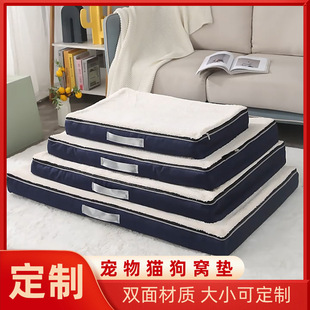
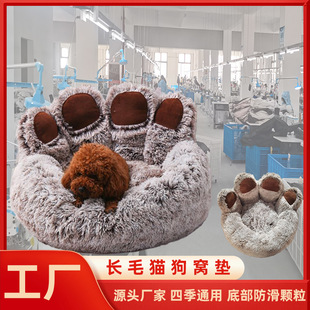
The human size dog bed is not a joke product. It is one of the fastest-growing home comfort categories of 2025–2026, driven by viral social media clips and a genuine demand for oversized, nest-like lounging furniture. Brands like Plufl turned a Shark Tank appearance into a multi-million-dollar business selling exactly this concept: a giant, bolstered bed originally designed for dogs, scaled up for people.
We manufacture pet beds and human-scale lounging products at our factory in Ningbo, China. Over the past 18 months, we have received more OEM inquiries for human-sized dog beds than for any other single product category. This guide covers what the product actually is, why it works, what goes into making a good one, and how brands and resellers can source their own version at factory-direct pricing.
Quick Answer
- A human size dog bed is an oversized pet bed (typically 170–190 cm / 67–75 inches long) with raised bolsters, designed for adults to curl up in.
- Retail prices range from $150 to $450. Factory-direct OEM pricing starts around $35–65 per unit at MOQ 100–300 pieces.
- Core materials: high-density foam base (35–45 kg/m³), shredded memory foam bolsters, and a removable machine-washable cover in sherpa, velvet, or microfiber.
What Is a Human Sized Dog Bed?
A human sized dog bed is exactly what it sounds like: a pet bed scaled to adult human dimensions. The typical specification is 170–190 cm long, 100–120 cm wide, and 25–35 cm deep at the center, with raised bolster walls of 15–20 cm on three or four sides. The shape creates a nest or cocoon effect that many people find calming.
The product crosses two categories: it functions as a floor lounger, reading nook, movie-watching station, and nap spot, while also doubling as a shared pet-and-owner bed. This dual purpose is a key selling point for brands: the target customer is a pet owner aged 20–40 who already spends on premium pet products and wants something for themselves too.
Why the Trend Took Off
Three factors drove the human dog bed from novelty to mainstream:
1. Social media virality. Short-form video platforms reward products that provoke a reaction. A grown adult climbing into a giant dog bed is inherently shareable. Early TikTok and Instagram Reels from Plufl generated millions of views with minimal ad spend.
2. The nesting instinct. Post-pandemic consumer behavior shifted toward home comfort products. Weighted blankets, oversized bean bags, and floor cushions all saw growth. The human dog bed fits this trend perfectly — it offers a sense of enclosure and security that flat mattresses and sofas do not.
3. Price anchoring from pet products. A premium dog bed costs $80–200. A human-sized version at $250–400 feels reasonable by comparison, even though it is essentially a floor mattress. The “dog bed” framing makes the price feel like a deal rather than a splurge.
Materials & Construction: What Makes a Good One
Not all human dog beds are equal. The difference between a product that gets five-star reviews and one that gets returned comes down to three engineering decisions:
1. Base Foam Density
The base cushion needs to support 60–100 kg of body weight without bottoming out. Standard pet bed foam at 18–25 kg/m³ density compresses flat within weeks under human weight. A proper human-sized bed uses 35–45 kg/m³ high-resilience foam, the same density used in sofa cushions. This is the single largest cost driver — the foam alone accounts for 40–50% of the bill of materials.
| Foam Density | Use Case | Human Weight Support | Lifespan |
|---|---|---|---|
| 18–25 kg/m³ | Standard pet bed | Bottoms out in 2–4 weeks | 6–12 months |
| 28–32 kg/m³ | Budget human dog bed | OK for light use, sags over 3–6 months | 1–2 years |
| 35–45 kg/m³ | Premium human dog bed | Full support, maintains shape | 3–5 years |
| 45–55 kg/m³ | Sofa / mattress grade | Overkill for floor bed, too firm for nesting | 5+ years |
2. Bolster Filling
The raised walls around the bed are what create the nest feel. Two common approaches:
- Shredded memory foam: Moldable, adjustable loft, does not go flat. Our recommendation for most products. Cost: $3–5 per kg of filling.
- Polyester fiber fill: Cheaper ($1–2/kg), fluffier at first, but compresses permanently after 2–3 months of regular use. Fine for bolsters that are decorative, not for bolsters that bear weight.
A good rule: if the customer will lean against the bolster while sitting, use shredded memory foam. If the bolster is just a visual boundary, fiber fill is acceptable.
3. Cover Material
The cover is the first thing the customer touches. It needs to feel premium, resist pilling, and survive machine washing. The three most popular options:
- Sherpa fleece (280–380 GSM): Soft, warm, and the most popular choice for human dog beds. Pilling resistance depends on fiber quality — specify anti-pilling treatment in the OEM order.
- Minky dot / dimple fabric: Raised dot texture that feels luxurious. More durable than sherpa but heavier.
- Microfiber velvet (220–300 GSM): Smooth, elegant look. Best for brands targeting a home decor audience rather than a pet audience.
Plufl vs Factory-Direct: Price Comparison
Plufl is the most recognized brand in this category. Their human-sized dog bed retails for $379–449 on their website. Here is how the economics break down compared to sourcing the same quality product from an OEM factory:
| Cost Component | Plufl Retail | OEM Factory Direct (MOQ 200) |
|---|---|---|
| Product cost | — | $38–55 per unit |
| Shipping (sea freight to US) | — | $8–12 per unit |
| Landed cost | — | $46–67 per unit |
| Retail price | $379–449 | $149–249 (your brand) |
| Gross margin | — | 55–70% |
The margin is substantial because the product is mostly foam and fabric — materials where China-based manufacturing has a significant cost advantage. The key is specifying the right foam density: many cheap suppliers quote $20–25 per unit using 18–25 kg/m³ foam, which will fail under human weight and generate returns. Insist on 35+ kg/m³ and test a sample yourself before committing to a production run.
How to Start Your Own Human Dog Bed Brand
If you are an Amazon seller, pet brand, or home goods retailer considering this product, here is the sourcing process:
- Define your spec: Size (S/M/L for kids, adults, XL), foam density, cover material, colors. Most factories need at least 2–3 SKUs to justify a production run.
- Request samples: Expect to pay $80–150 for a custom sample including shipping. A good factory delivers samples in 10–15 days.
- Test for 2+ weeks: Sleep on it, sit on it, wash the cover twice. Check if the foam holds shape and the zipper survives the washer.
- Place your order: Typical MOQ is 100–300 pieces per SKU. Production takes 25–35 days. Sea freight adds 25–40 days depending on your destination port.
- Brand it: Your logo on the product, custom packaging, hang tags, and care labels are standard OEM services at no extra cost above MOQ.
We produce human-sized dog beds in three standard sizes. Browse our human dog bed collection or request a custom quote.
Frequently Asked Questions
Are human-sized dog beds actually comfortable?
Yes, if the foam density is right. A 35–45 kg/m³ foam base with shredded memory foam bolsters provides genuine support and comfort for napping, reading, and lounging. Products made with cheap 18–25 kg/m³ foam will bottom out quickly and feel like lying on the floor.
How much does a human dog bed weigh?
A full-size adult model (180 x 110 cm) typically weighs 12–18 kg depending on foam density and bolster filling. Foldable versions are lighter at 8–12 kg because they use segmented foam panels.
Can you wash a human-sized dog bed?
The cover should be removable and machine-washable. The foam base cannot go in a washing machine. Spot-clean the foam with a damp cloth and mild detergent, then air dry. A waterproof liner between the foam and cover is a smart addition for OEM orders.
What is the minimum order for a custom human dog bed?
Most factories, including ours, set the MOQ at 100–300 pieces per SKU. For a first order with 2–3 SKUs (sizes or colors), you are looking at a total commitment of 200–900 units. Sample orders of 1–3 pieces are available for evaluation before committing to production.
Is a human dog bed the same as a floor mattress?
No. The defining feature of a human dog bed is the raised bolster walls on three or four sides, which create a nest or cocoon shape. A floor mattress is flat. The bolsters provide head and arm support and a sense of enclosure that flat surfaces do not offer.
Related: Top 10 Pet Bed Manufacturers China | Human Dog Bed Products | All Pet Beds | Request a Quote